PRP for Dental Implants, Bone Grafts & Oral Surgery in Boston, MA
Supporting Your Body’s Natural Healing
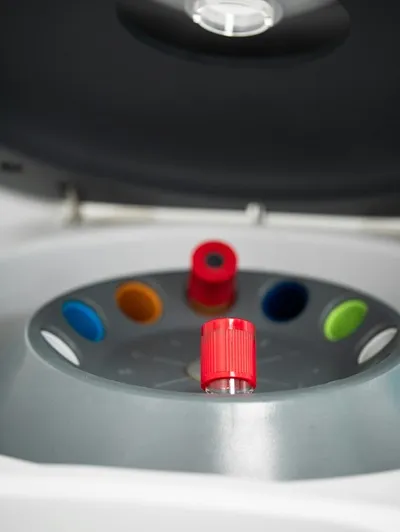
Your body already knows how to heal. Platelet-rich plasma therapy — PRP — harnesses concentrated growth factors from your own blood to support faster, more comfortable recovery after dental implants, bone grafting, extractions, and oral surgery. We draw a small blood sample, process it through our Med Equip 5G centrifuge system to concentrate the platelets and growth factors, then apply the PRP directly during your procedure. At Smileboston Cosmetic & Implant Dentistry, it is one of the advanced tools we use when it is genuinely the right fit for your care.
 What PRP Can Support
- Dental implant placement and osseointegration
- Bone grafting and socket preservation
- Sinus lift procedures
- Tooth extractions, including complex cases
- Soft tissue and gum-related procedures
Why It Works
- Derived entirely from your own blood — no foreign materials, no rejection risk
- Concentrated growth factors signal your body to repair and regenerate
- Prepared and applied in-office during your procedure with no delay
- Used across dental and medical surgery for decades with a strong safety record
Why Smileboston Cosmetic & Implant Dentistry
- Led by Steven D. Spitz, DMD, a prosthodontist with nearly 30 years of experience in complex restorative and implant care
- PRP is part of a coordinated treatment plan, recommended only when it is genuinely right for you
- In-house processing using a centrifuge separates and concentrates platelets and growth factors without outside lab involvement, meaning faster application and better results
- Treatment is always planned with you, not presented to you
For Those Who Want Additional Details
What Is Platelet-Rich Plasma (PRP) in Dentistry?
PRP, also known as PRF or PRG, has been used in dentistry for decades to support healing following surgical and restorative procedures, valued for its ability to work with your body’s natural biology rather than introducing foreign materials. Because it comes from your own blood, there is no risk of rejection or allergic reaction, and it integrates naturally with surrounding tissue.
Beyond dentistry, PRP is used across multiple surgical fields including cardiovascular, orthopedic, and maxillofacial surgery, a reflection of how well-established this approach has become in medicine broadly.
How PRP Supports Healing After Dental Procedures
PRP is not a replacement for skilled care. It is a complement to it. When used as part of a carefully planned treatment, PRP may offer healing benefits that improve your recovery and support long-term outcomes.
Clinical research has shown promising results regarding the application of PRP to dental and oral surgical procedures, with potential benefits including reduced bleeding, enhanced soft tissue healing, and support for bone regeneration.
Potential benefits include:
- Accelerated healing — growth factors may help tissue repair more efficiently following surgery or extraction
- Reduced swelling and discomfort — PRP can help moderate the body’s inflammatory response in the treated area
- Enhanced bone and tissue regeneration — particularly valuable in grafting procedures
- Improved implant integration — supporting osseointegration as the implant bonds with surrounding bone
- Reduced dry socket risk — helping protect the socket during early healing following extraction
PRP results vary from patient to patient. Some patients experience notably faster healing and more efficient bone integration; others see modest benefits. This variability is normal and depends on your individual healing response, age, and overall health. Whether PRP is appropriate for your procedure is determined based on your specific needs and treatment plan. We present it as one option among several, and only when it genuinely fits your care. PRP is always optional, and our team will discuss the potential benefits and help you understand whether it is right for you.
PRP Procedures at Smileboston Cosmetic & Implant Dentistry
PRP for Dental Implants
Implant success depends in part on how well the implant integrates with surrounding bone. PRP may be used at the implant site to support osseointegration and promote healthy bone and tissue response during early healing.
PRP for Bone Grafting
When bone grafting is needed to prepare a site for an implant or restore lost bone volume, PRP can be incorporated into the graft to support regeneration. Research has shown greater alveolar bone density and improved soft tissue healing in patients treated with PRP, supporting more predictable bone development at graft sites.
PRP for Socket Preservation
After a tooth is removed, the socket must be carefully managed to preserve the bone and tissue needed for future treatment. Research suggests that PRP used in the alveolar socket following extraction can improve soft tissue healing and positively influencing bone regeneration. PRP can be used as part of socket preservation to support healing and protect the extraction site.
PRP for Sinus Lift Procedures
Sinus lift surgery creates additional bone volume in the upper jaw to support implant placement. PRP may be used during this procedure to encourage bone growth and support tissue repair.
PRP for Soft Tissue Procedures
In procedures involving the gums or surrounding soft tissue, PRP can be applied to promote healing, support tissue regeneration, and reduce post-operative discomfort.
PRP for Tooth Extractions
For patients undergoing tooth removal, particularly complex extractions, PRP may be used in the socket following the procedure to support healing and reduce the risk of complications. Clinical findings indicate that post-operative pain tends to subside more quickly in patients treated with PRP following extraction.
PRP Applications at Smileboston Cosmetic & Implant Dentistry
(a bit more detail for those who are interested)
We use multiple forms of PRP therapy, each suited to different clinical situations. The specific application used in your care is based on the procedure and your individual needs.
- PRP Liquid (PRP L) — a fluid form applied directly to a treatment site
- PRP Gel (PRP G) — a thicker concentration used where stability is beneficial
- PRP Membrane (PRP M) — a flexible barrier used to protect and support healing tissue
- PRP Exudate (PRP E) — a concentrated fluid used to support tissue repair
- PRP Plug — used to fill and protect extraction sockets during healing
- Gummy Bone — a combination material that incorporates PRP to support bone grafting
Each form is prepared from your own blood using our in-office processing system.
How the PRP Process Works
- A small blood draw. A sample of your blood is collected at the time of your procedure, just like routine lab work at your doctor’s office.
- Processing and concentration. The sample is processed using a centrifuge, which separates and concentrates the platelets and growth factors.
- Application during your procedure. The prepared PRP is applied to the treatment area in the appropriate form — liquid, gel, or membrane — as determined by your care plan.
- Healing and recovery. Following treatment, PRP works alongside your body’s natural healing response to support tissue and bone repair.
Preparation is completed in-office, so there is no delay between processing and application.
Who May Be a Candidate for PRP Treatment?
PRP is not recommended for every patient or every procedure. Candidacy is evaluated based on your oral health, the nature of your procedure, and your overall treatment goals.
PRP may be considered for patients who are:
- Undergoing dental implant placement
- Having bone grafting procedures
- Receiving socket preservation following extraction
- Preparing for or recovering from oral surgery
- Undergoing sinus lift procedures
- Having soft tissue or gum-related procedures
If PRP may be appropriate for your care, it will be discussed as part of your treatment planning conversation. You will always have the opportunity to ask questions and understand your options before any decision is made.
Technology in the Right Hands
I have always believed that advanced technology should serve patients, not the other way around. Our Med Equip 5G centrifuge system allows us to prepare PRP in-house with consistent, high-quality processing as part of your treatment, not as an add-on, but as part of a plan designed around your specific needs, your healing, and your long-term outcomes. In our practice, we have observed that patients who choose PRP typically experience faster healing times, better integration of implants with bone, and more efficient overall recovery. For patients undergoing implants, grafting, or oral surgery, knowing that every aspect of your care has been considered carefully makes a real difference.
— Steven D. Spitz, DMD, Founder
Schedule a Consultation for PRP Dentistry in Boston
If you are preparing for a dental implant, bone graft, extraction, or other oral surgery and would like to learn whether PRP may be appropriate for your care, we welcome you to reach out.
We will review your needs, answer your questions, and help you understand all your options.
Smileboston Cosmetic & Implant Dentistry serves patients throughout Boston and the surrounding area. New patients always welcome.